

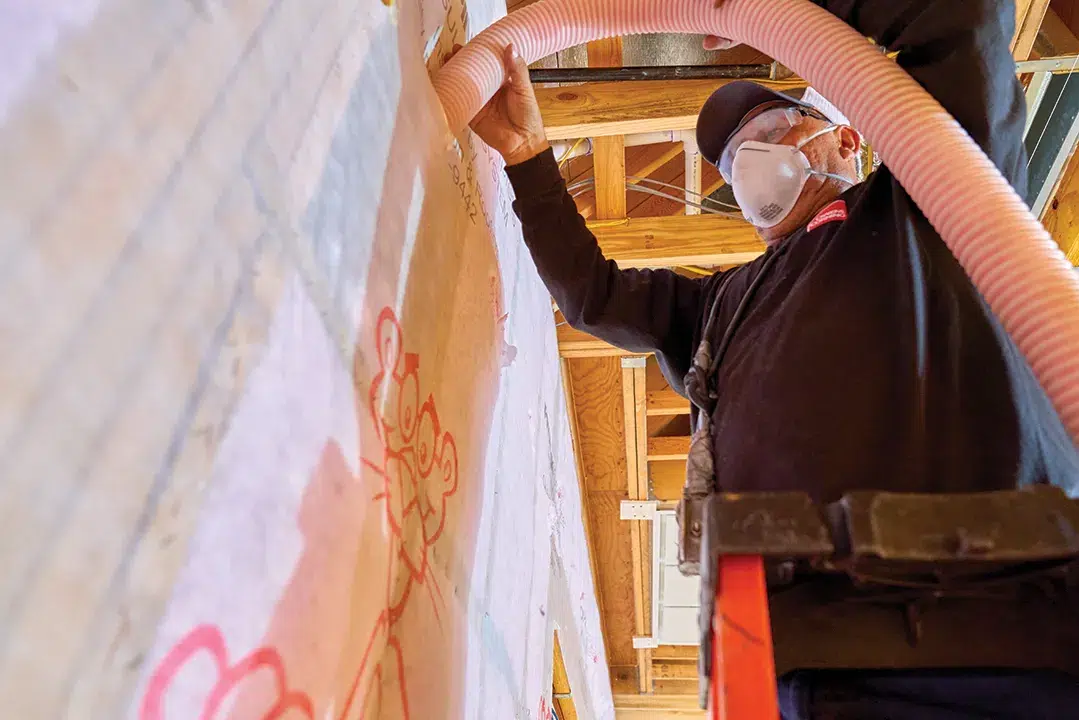
Insulation lays a foundation of energy efficiency for residential, commercial and industrial structures. It is one of the most cost-effective ways to save energy and reduce monthly heating and cooling costs. Whether you are remodeling a home or building a new business, there are many benefits of insulation:
- Reduce Heating & Cooling Costs
- Improve Indoor Air Quality
- Enhance Home Energy Efficiency
- Help Keep Out Allergens/Pests
- Stay Comfortable Year Round
- Sound Control
- Can Help Boost Resale Value of Home
What Is R-Value?
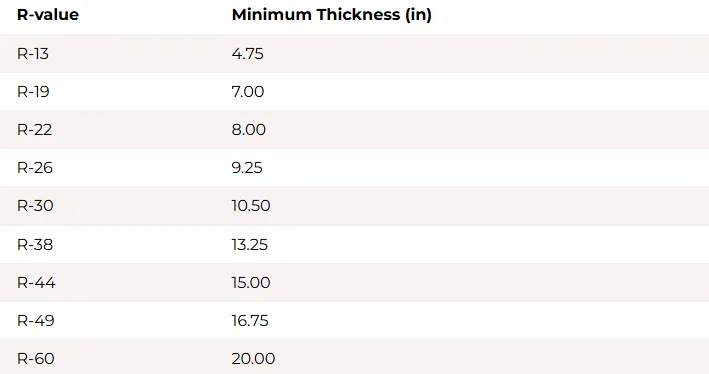
The “R” in R-value stands for resistance to heat flow. The higher the R-value, the higher the level of resistance and the greater the insulating power. R-value requirements vary depending on climate and building type.
Below is an example of how R-value relates to the amount of insulation used in a typical attic. The thicknesses listed are for Owens Corning® PROPINK® L77 PINK® FiberglassTM Unbonded Loosefill Insulation blown in the attic and not a general rule of thumb for any other brand/type of insulation in any other areas/applications. We can provide you the correct amount of insulation for your project.
Where to Insulate
Insulation should be installed in the walls, floors, attic space, basement and crawlspace. A more detailed list includes:
- Ceilings with unheated spaces above, including dormer ceilings
- Knee walls of attic spaces finished as living areas
- Sloped walls and ceilings of attics finished as living areas
- Cathedral or vaulted ceilings
- Around perimeters of slabs
- Floors above vented crawl spaces
- Floors over unheated or open spaces such as over garages or porches
- Basement walls
- Band and header joists
- Interior walls, ceilings, or floors where extra sound control is needed
- Floors over unconditioned basements
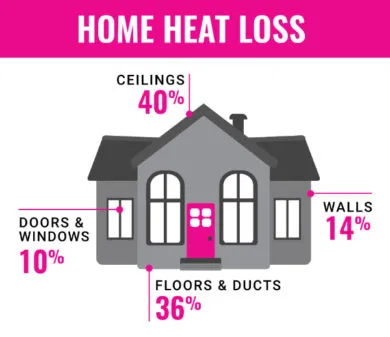
Think doors and windows are at the top of your heat’s escape plan? Think again! Walls, ceilings, floors and ducts can account for 90% of heat loss if not properly insulated.
How Much Insulation Is Enough?
The amount of insulation needed varies depending on location, building type and materials. You can review this recommended R-Value levels chart from ENERGY STAR. We will work with you to provide the right insulation estimate for your specifications.
Things to Consider When Insulating
- What type of insulation is being used?
- Does the insulation meet or exceed local building codes and national recommended insulation levels?
- How effective is the insulation (thermal performance, acoustical performance)?
- Is the insulation resistant to moisture, fire and settling?
- Is the insulation material safe and sustainable?
- Is the insulation cost-effective?
Your House as a System
Though insulation is one of the most essential and cost-effective ways to create overall efficiency, there are many factors to take into consideration. Insulation and air sealing combined with energy-efficient appliances, windows, doors, lighting, and HVAC equipment build a whole-house efficiency system that will prove beneficial throughout the year and for years to come. We can provide an in-home consultation to help you create a plan to address any energy concerns in your household.